Jürgens Astrophotos
  • Home
  • amateur astronomy
  • Photobook
  • SEESTAR S50 recordings
  • Deep Sky - Galaxies, Nebulae
  • comets
  • planets
  • MOON
  • SUN
  • telescopes
  • about us
  • physics  
  • Photobook  
     
    Jürgens Astrophotos
      • Home
      • amateur astronomy
      • Photobook
      • SEESTAR S50 recordings
      • Deep Sky - Galaxies, Nebulae
      • comets
      • planets
      • MOON
      • SUN
      • telescopes
      • about us
      • physics  
      • Photobook  

      Deep Sky - Galaxies, Nebulae


      • album

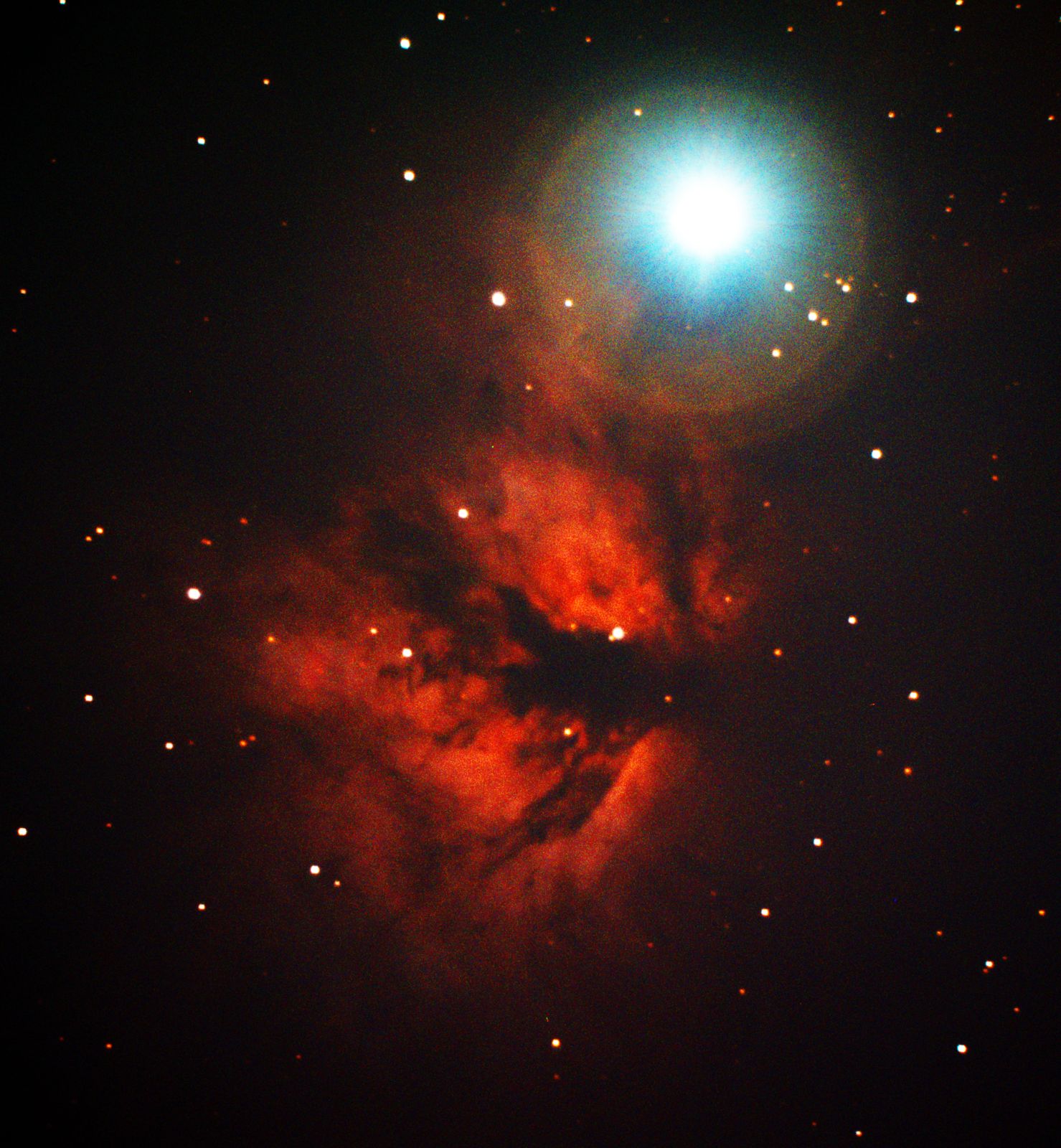
      • Flame Nebula

        The Flame Nebula NCG2024. The bright star above belongs to Orion's Belt. Taken on March 7, 2024

      • The horse's head looks at the flame nebula

        March 7, 2024

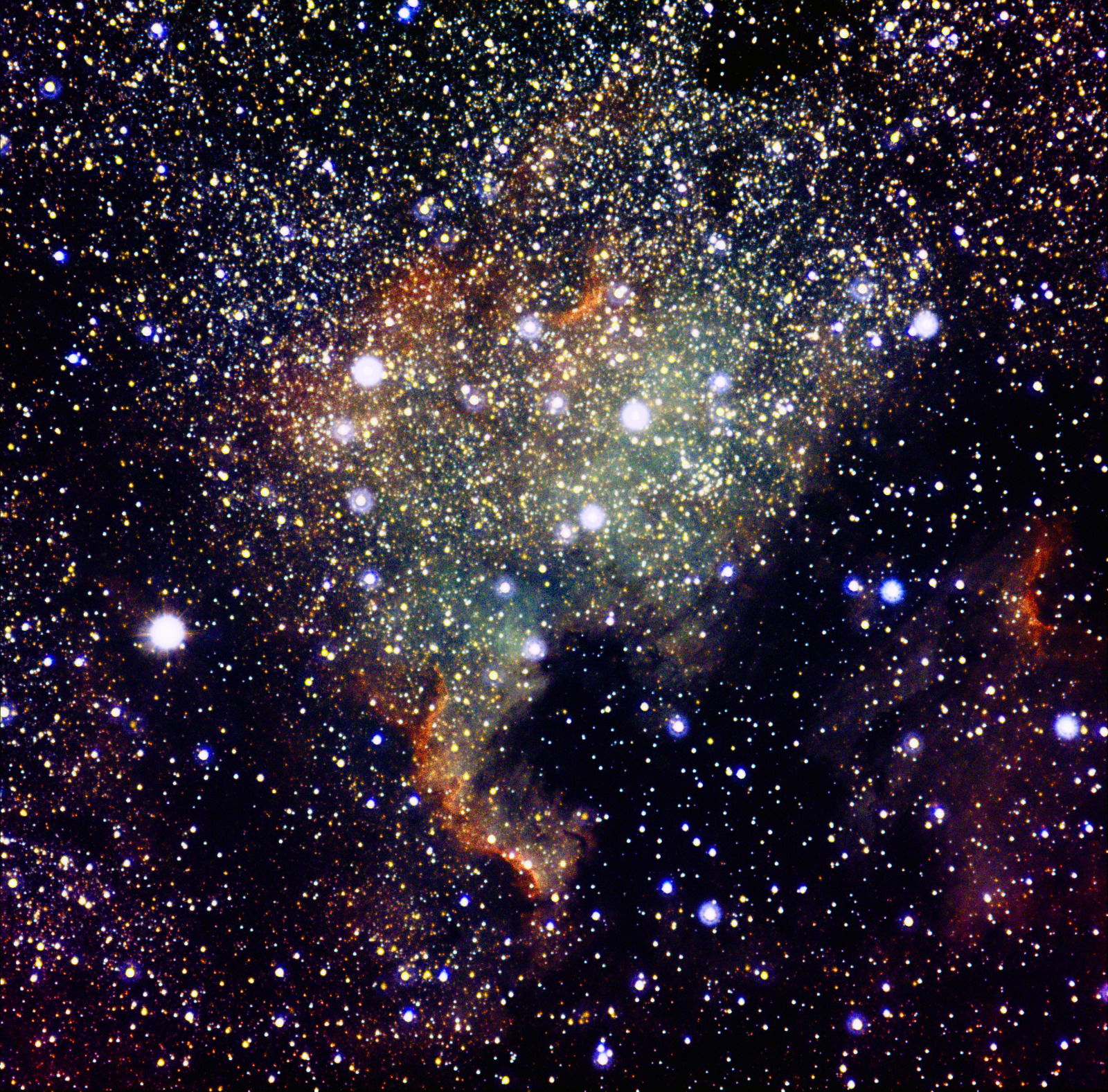
      • North American Nebula -- NCG 7000

        In the night sky, in the constellation Cygnus, there is a gas nebula 2500 light years away, which is called the North America Nebula because of its outline. I took the photo on October 8, 2024 with an exposure time of 60 minutes.

      • Pleiades - Messier 45

        The Pleiades. In ancient times, the Pleiades were named after the seven daughters of Atlas. They are depicted on the Nebra Sky Disk. Distance 440 light years. The blue glow around the individual stars comes from interstellar dust.

      • Eagle Nebula -- Messier 16

        New stars are forming at the top of the dust pillars (pillars of creation). The Eagle Nebula is 7,000 light years away.

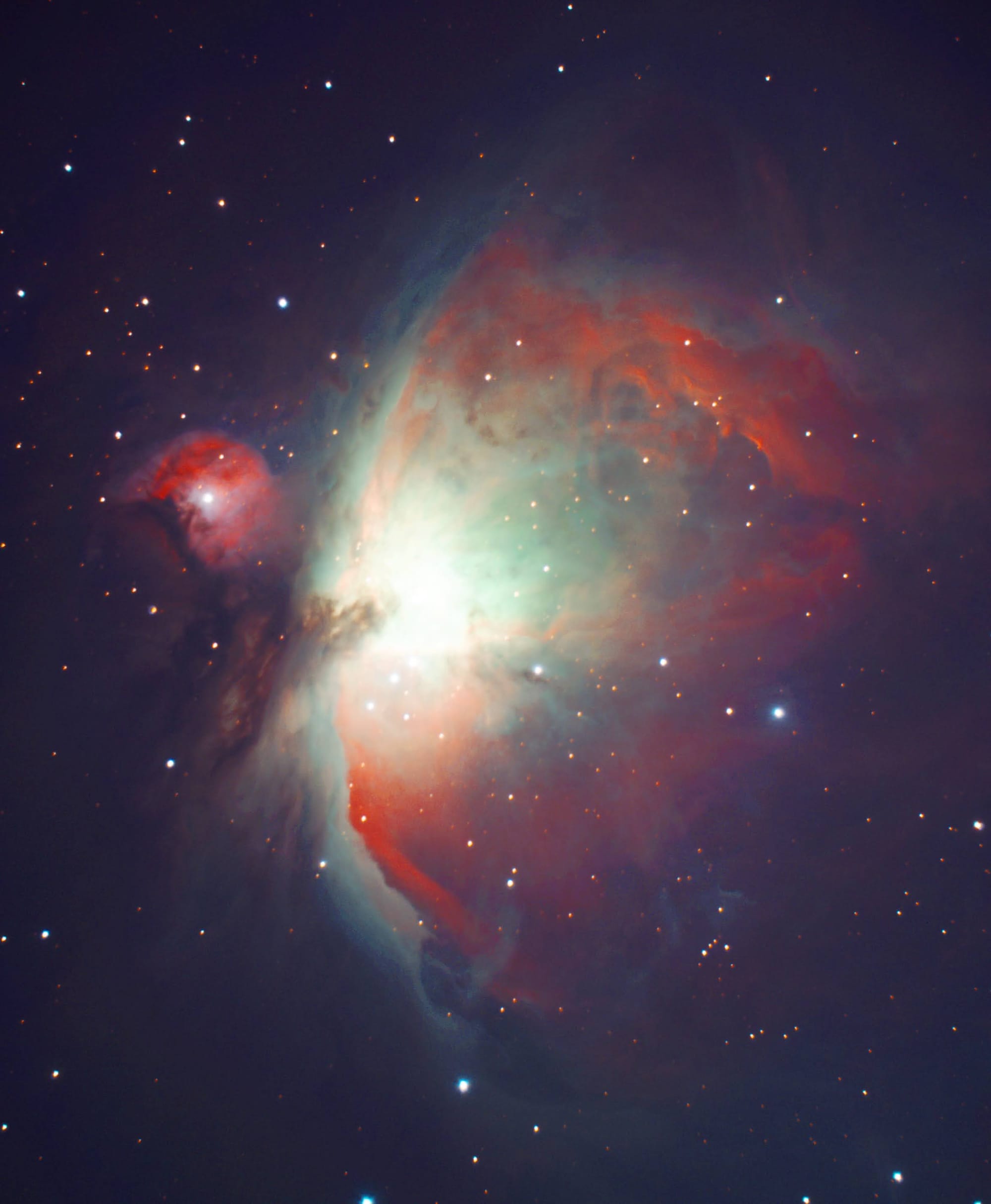
      • The Orion Nebula Messier 42

        Emission nebula in the constellation Orion. 1350 light years away. 30 minutes exposure time. Since it was 0 degrees with 99% humidity, I had to heat the front panel of the telescope so that it didn't fog up. C8 Celestron telescope with 0.63 focus reduction, ZWO ASI533MC Pro camera with CLS filter.

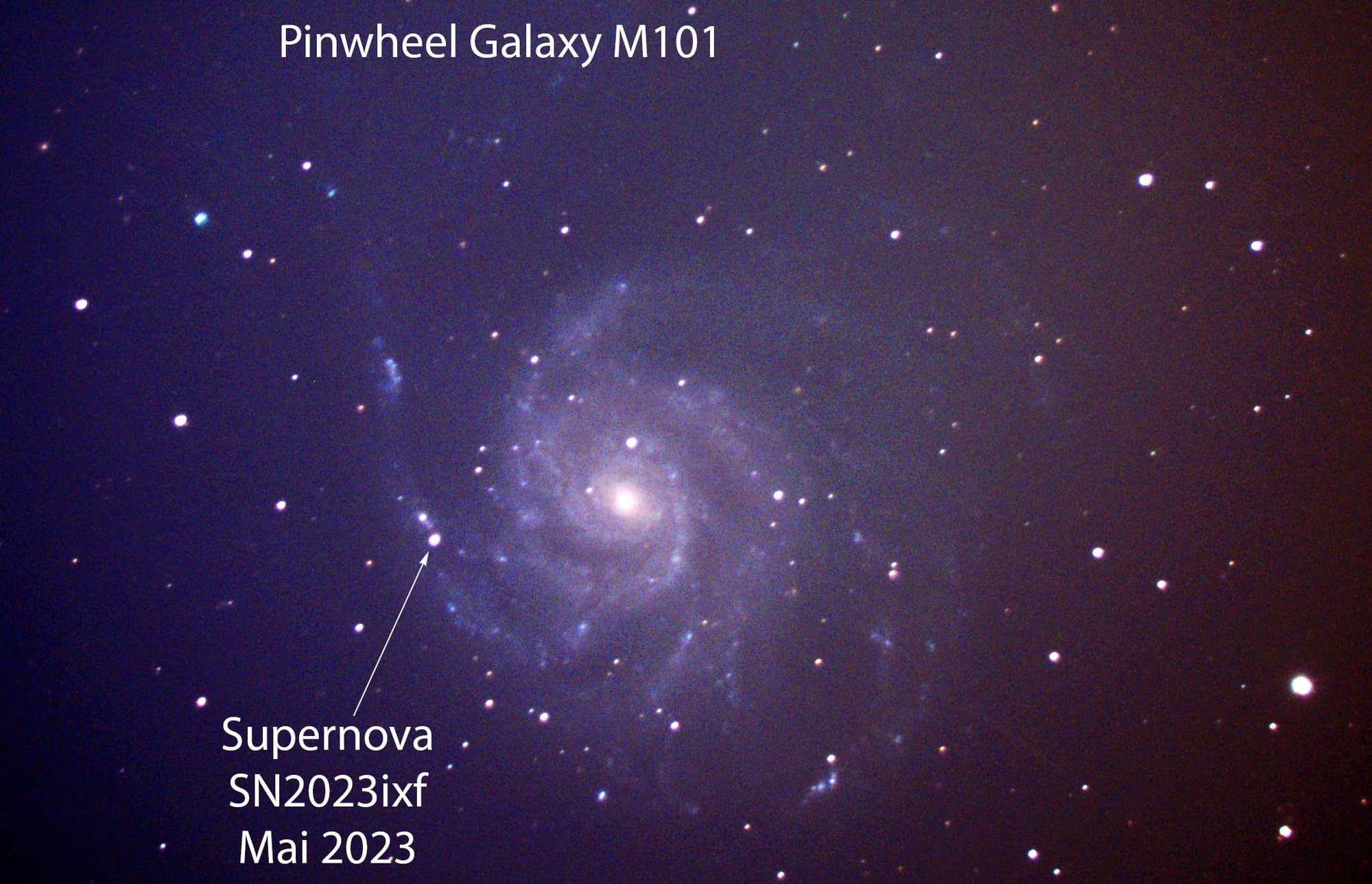
      • Pinwheel Galaxy -- Messier 101

        The Pinwheel Galaxy is 21 million light years away. The image shows the supernova SN2023ixf, which was discovered in May 2023. It exploded 21 million years ago. Image taken on July 27, 2023

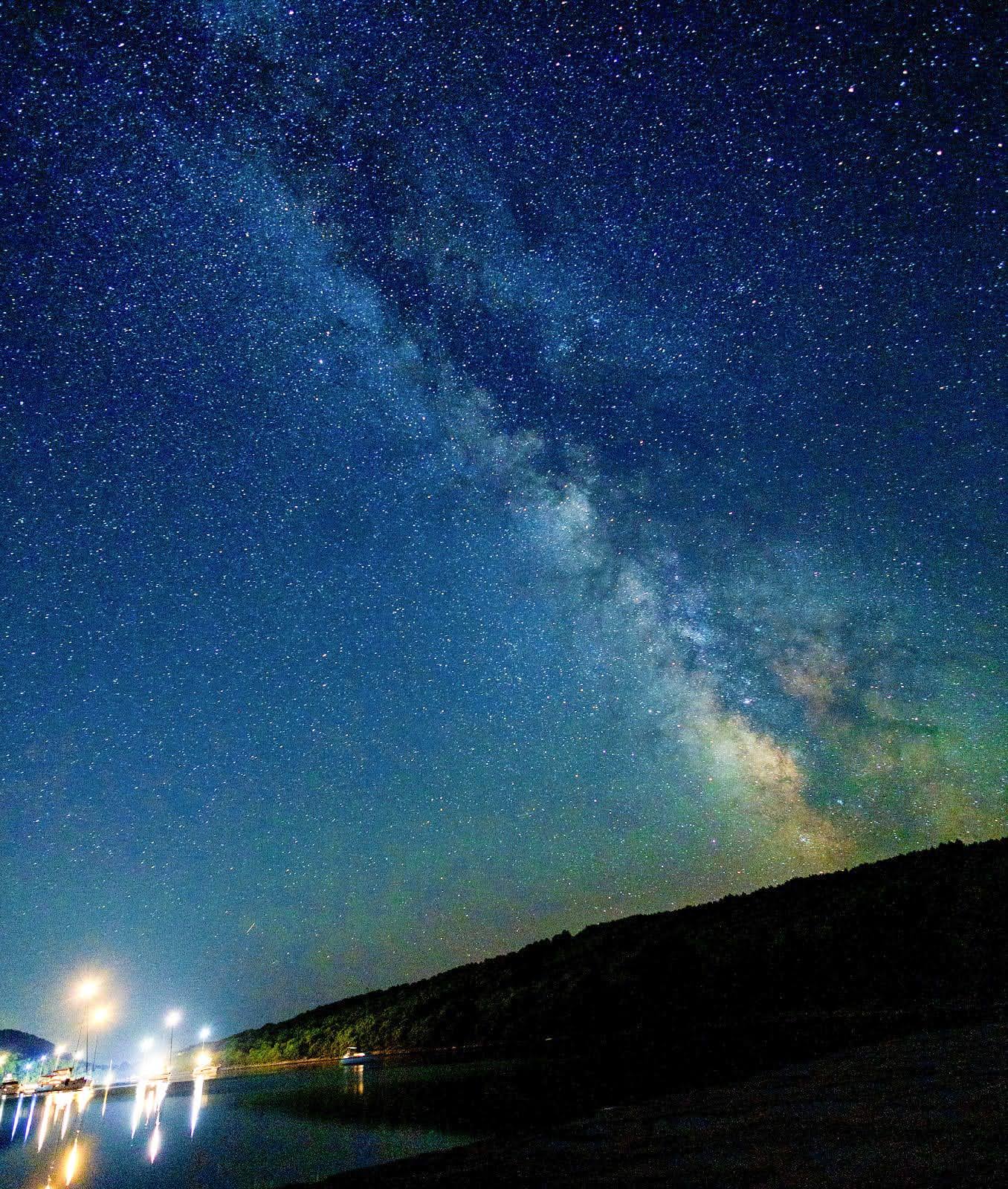
      • The Milky Way

        Our home galaxy taken in Croatia on August 13, 2023

      • Andromeda Galaxy - Messier 31

        Our neighboring galaxy. 2.5 million light years away. Below left is the dwarf galaxy Messier 110. Image taken on September 4, 2023

      • Andromeda Galaxy

        central area

      • The southern starry sky.

        In South Africa, the Southern Cross and the two Magellanic Clouds allow us to experience the starry sky in a completely new way. We can never see this part of the Milky Way in Europe. The second closest star is Alpha Centauri, 4.3 light years away (the closest star to Earth is the Sun, 8 light minutes away).

      • Large Magellanic Cloud

        At a distance of 163,000 light years, this galaxy is the closest to the Milky Way but with "only" 15 billion stars it is 20 times smaller than our home galaxy. Image taken on February 6, 2019

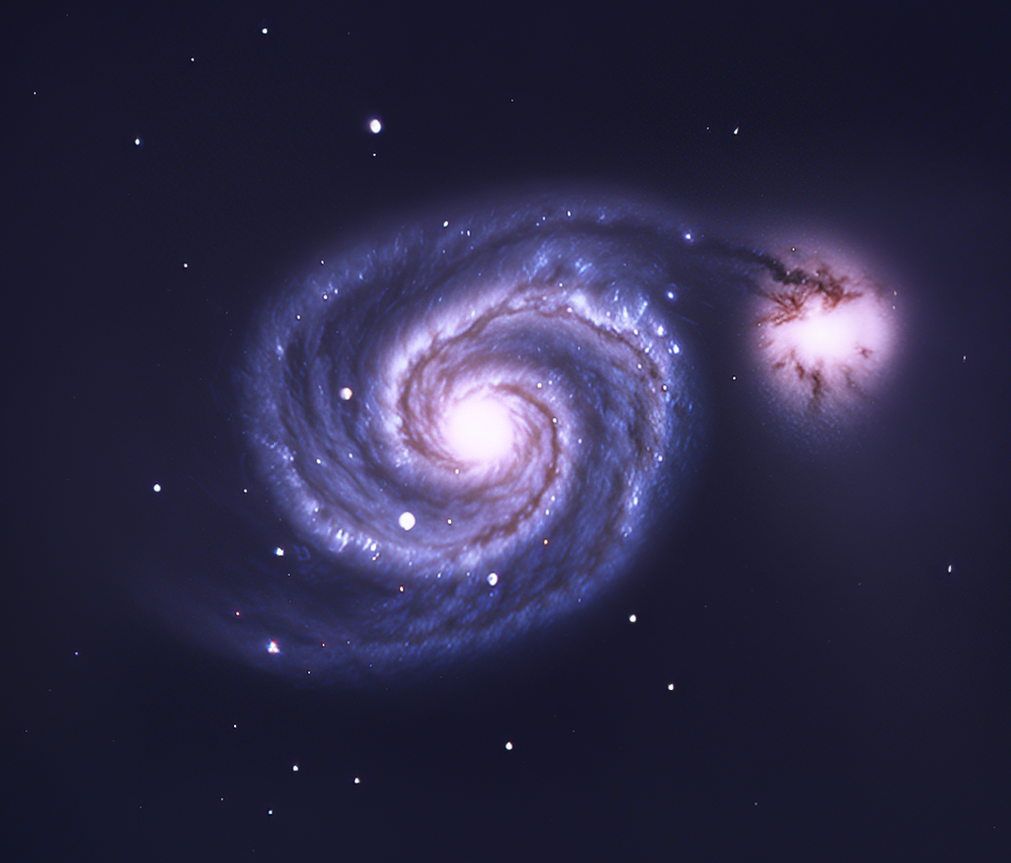
      • Messier 51 -Whirlpool Galaxy

        The Whirlpool Galaxy lies around 27 million light years away in our cosmic neighborhood - it is the same size and brightness as our Milky Way. The smaller companion galaxy on the right has penetrated the main galaxy twice in the last 500 million years. Exposure time: 70 minutes.
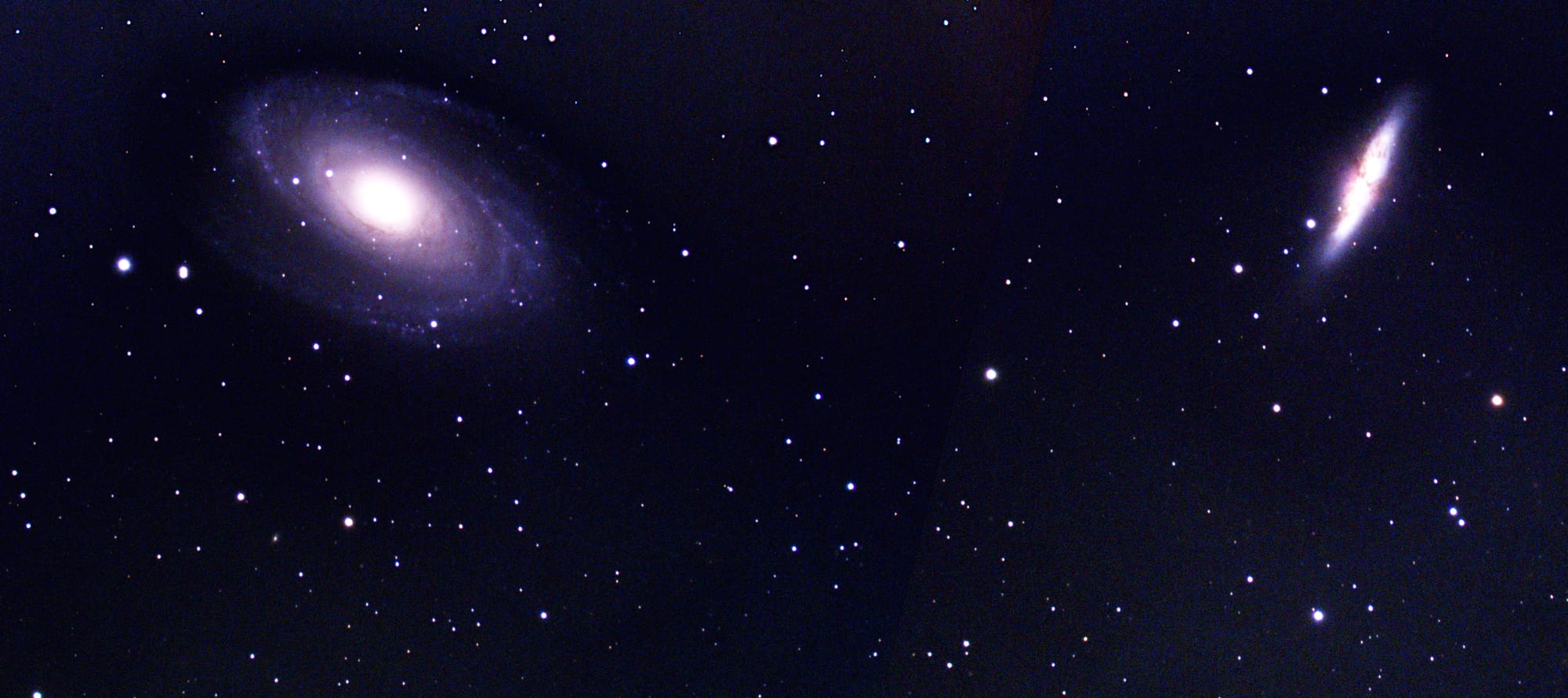
      • M81 group

        The M81 group comprises a total of 60 galaxies in the constellation Ursa Major. The two brightest are shown here: Messier 81 - Bode's Galaxy - (left) and Messier 82 (right). The distance is 12 million light years.

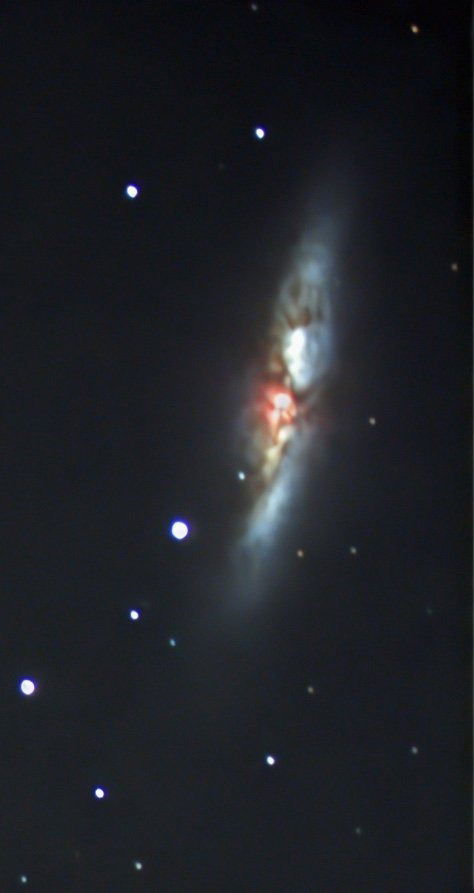
      • Messier 82

        Spiral galaxy in the constellation Ursa Major. Part of the M81 galaxy group

      • Bode's Galaxy - Messier 81

        Spiral galaxy in the constellation Ursa Major. 12 million light years away.

      • Messier 27 - the Dumbbell Nebula

        A planetary nebula is the shell that a red giant ejected 10,000 years ago. A neutron star remains in the center.

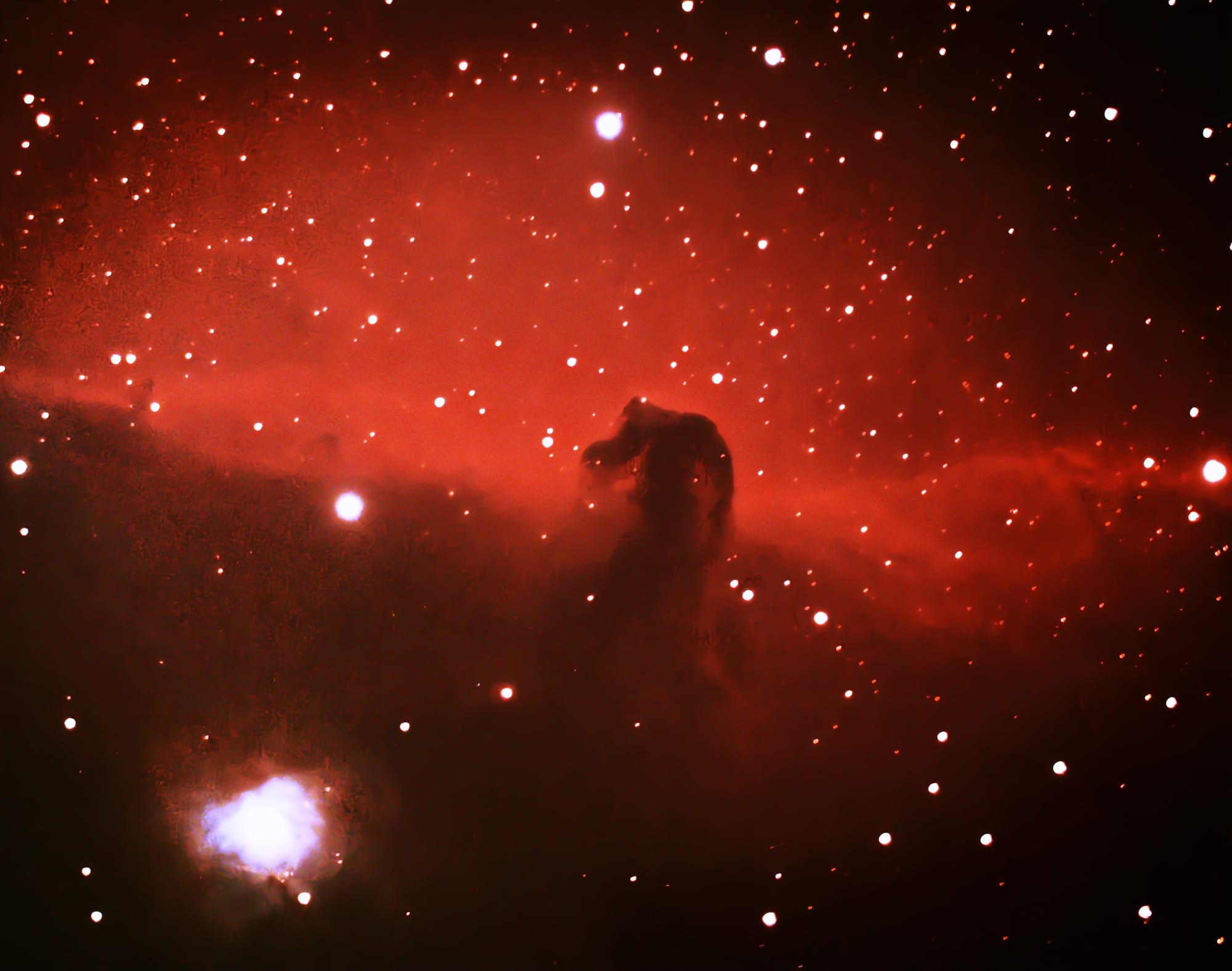
      • Horsehead Nebula - IC434

        Dark cloud in the constellation Orion. 1500 light years away. 30 minutes exposure. February 3, 2024

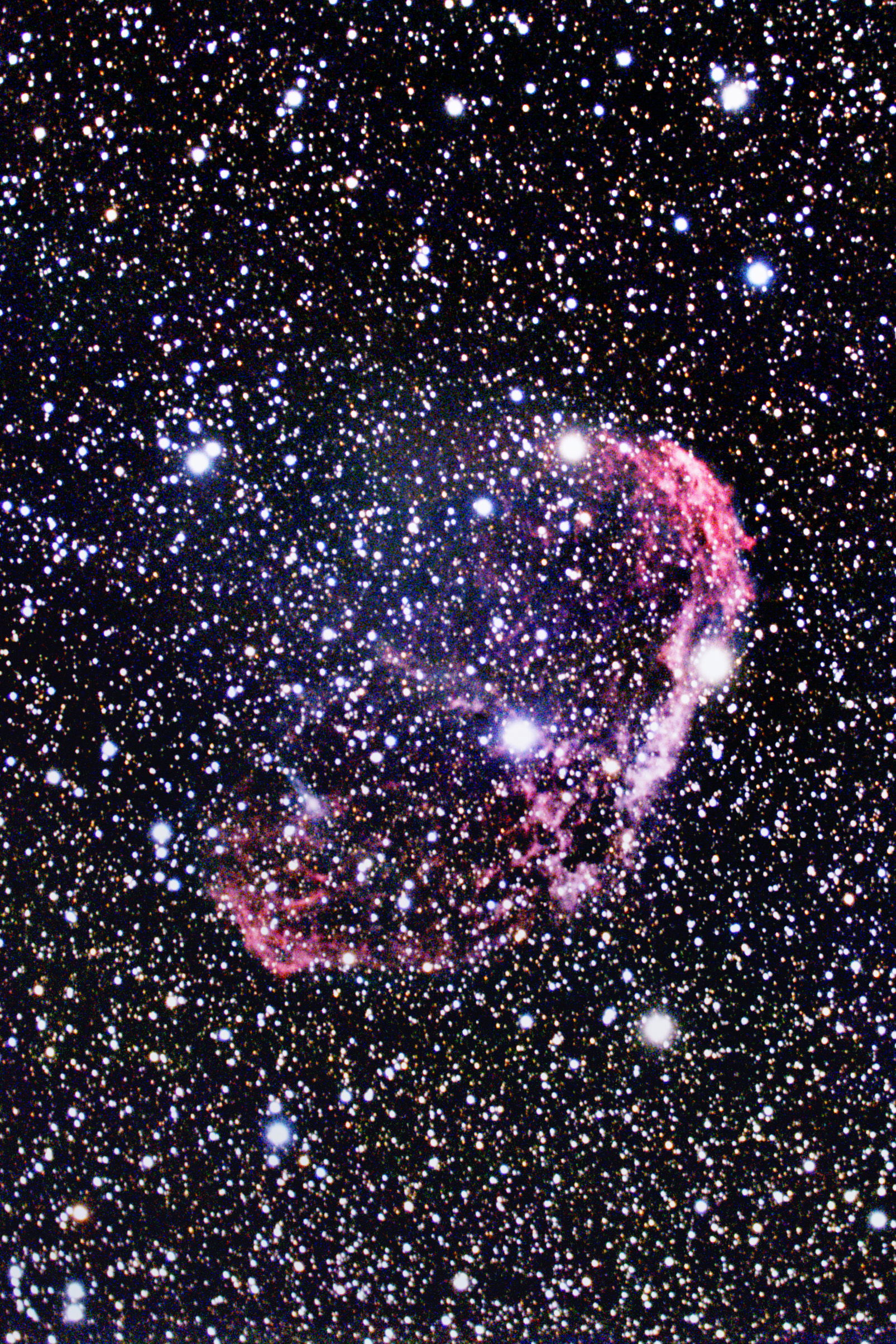
      • Crescent Nebula

        Crescent Nebula (NGC 6888) in the constellation Cygnus. The stellar wind shapes the flow of matter from the remains of a star that exploded into a red giant into this colorful structure 5000 light years away.

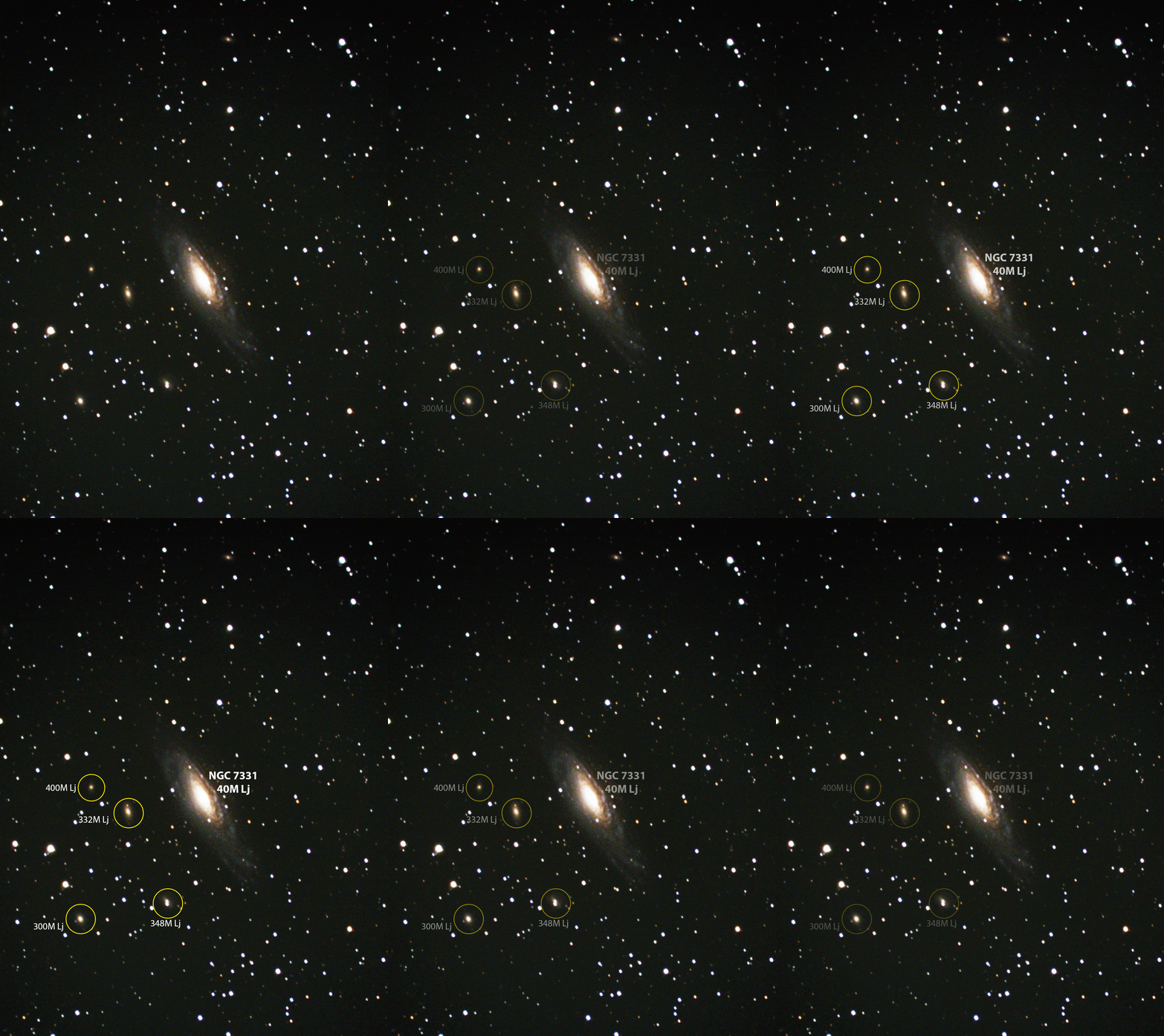
      • NGC 7331 group

        NGC 7331 is a spiral galaxy in the constellation Pegasus. It is 40 million light years away. In the same field of view there are other galaxies that are up to 400 million light years away.

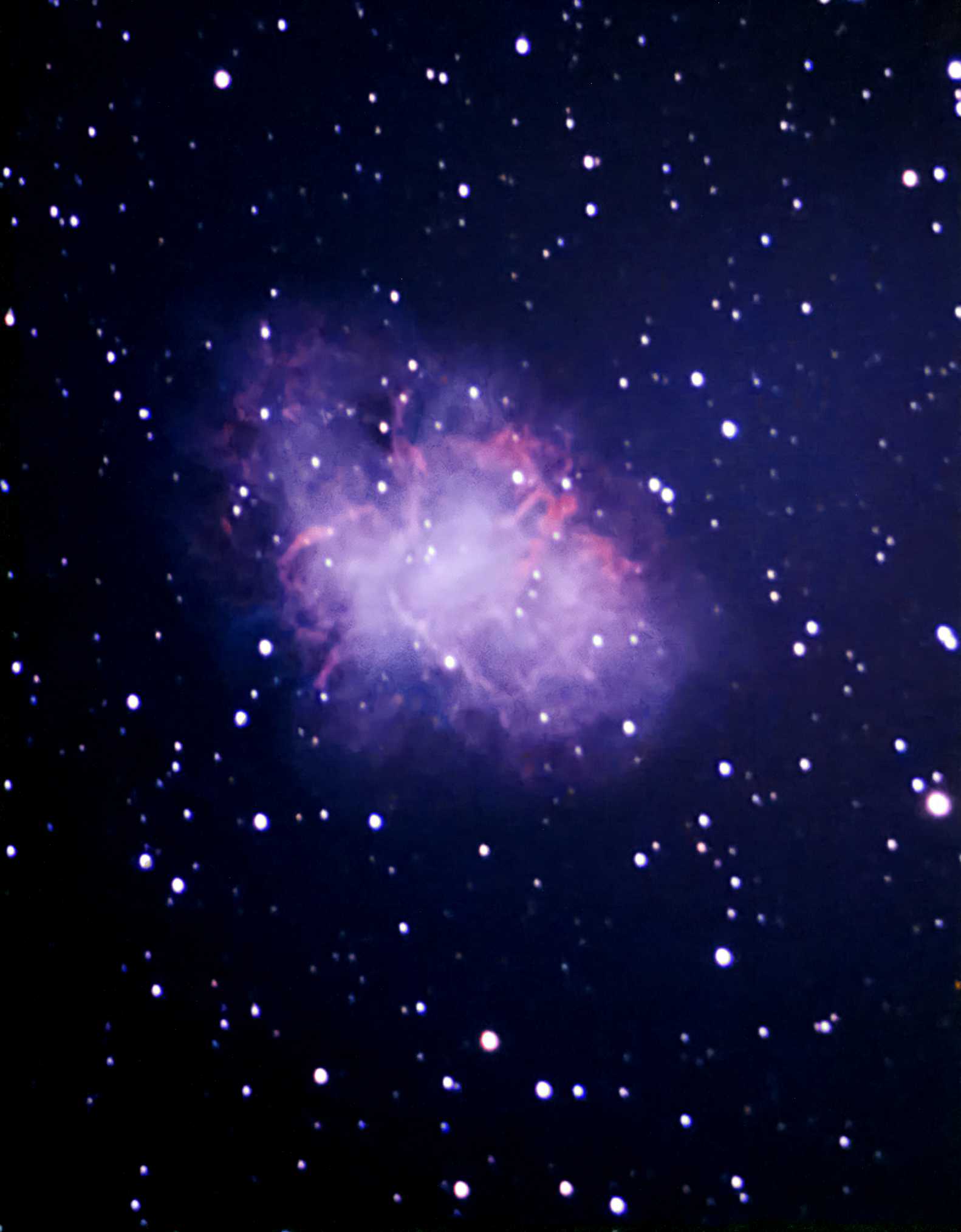
      • Crab Nebula - Messier 1

        The Crab Nebula is the remnant of a supernova explosion observed by Chinese astronomers in 1054. The Crab Nebula is 6,200 light-years away. Image taken on January 3, 2025; 1 hour exposure time

      Jürgens Astrophotos
      Copyright © 2026 All rights reserved
      • Home
      • amateur astronomy
      • Photobook
      • SEESTAR S50 recordings
      • Deep Sky - Galaxies, Nebulae
      • comets
      • planets
      • MOON
      • SUN
      • telescopes
      • about us
      • physics  
      • Photobook